Why You Need a Prototype Before Committing to Full Tooling
Summary
Committing straight to full production tooling without a prototype step can lock in a design flaw that costs far more to fix once hardened steel is cut than it would have cost to catch earlier. This guide covers what a prototype actually validates and why skipping it is rarely the time saver it appears to be.
Key Takeaways
- A prototype mold typically costs a fraction of full production tooling, making design mistakes far cheaper to catch early.
- Prototypes validate fit and function with real end-use material, not just visual appearance.
- Moldability issues like sink, warp, or short shots often only appear once plastic actually flows through the geometry.
- Design changes found after full tooling is cut can mean rebuilding cavities, not just a quick adjustment.
- A functional prototype gives stakeholders physical parts to test before committing to volume production.
Checklist Item: Confirm Fit and Function With Real Material
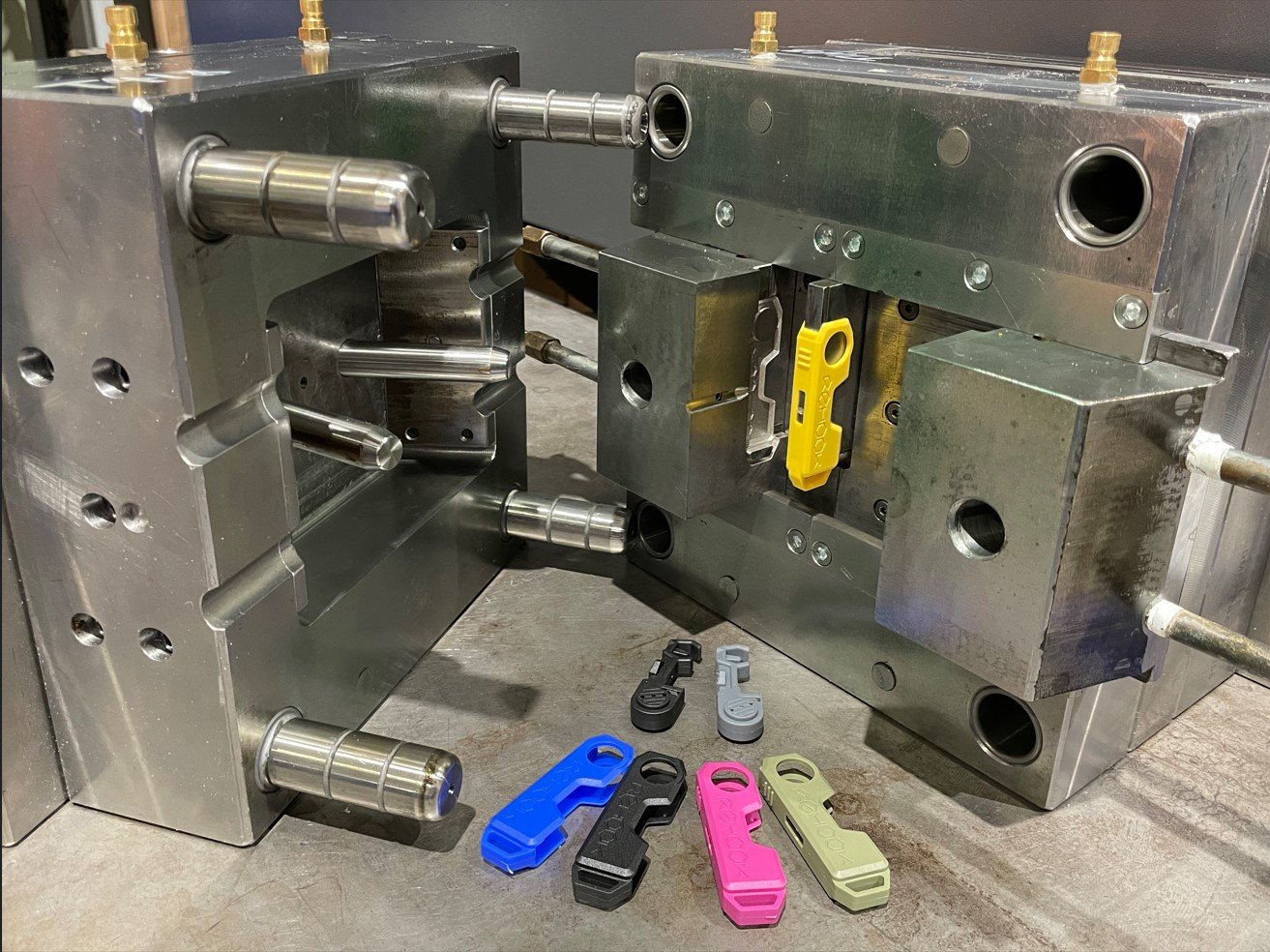
A 3D-printed or CNC-machined visual model can confirm how a part looks, but it can’t confirm how the part behaves once molded in its actual production resin, where shrinkage, flex, and surface finish all differ from a machined mockup. A true injection-molded prototype, even from simple aluminum tooling, produces parts in the real material so fit and function get tested under conditions that actually match production.
Catching Moldability Problems Before They're Permanent
Issues like sink marks, warpage, short shots, or weld lines often don’t show up until plastic is actually flowing through the cavity, which means a design that looks fine in CAD can reveal real moldability problems the first time it’s prototyped. Finding these issues in a low-cost prototype mold is a design adjustment; finding them after full production tooling is cut is a rebuild.
| Factor | Why Prototyping First Matters |
|---|
| Tooling cost | Prototype tooling is a fraction of the cost of full production steel |
| Material behavior | Prototypes reveal shrinkage, flex, and finish in the real production resin |
| Moldability issues | Sink, warp, and short shots often only appear once plastic actually flows |
| Design changes | Far cheaper to make before production steel is cut than after |
Planning to move from design to production tooling?
Share your part files and we’ll help scope a prototype step before full tooling commitment.
Understanding What Full Tooling Changes Actually Cost
Production tooling is built from hardened steel engineered for hundreds of thousands of cycles, and changing a cavity’s geometry after that steel is cut, adding a rib, moving a boss, adjusting a wall thickness, means machining time, schedule delay, and in some cases scrapping and rebuilding an entire cavity insert. A prototype absorbs those design iterations while changes are still inexpensive.
Using Prototypes to Align Stakeholders Before Volume Commitment
Beyond engineering validation, physical prototype parts give sales, marketing, and leadership something tangible to react to before a company commits budget to full production volume. Design feedback that surfaces once people can actually hold a part is often different from feedback given on a rendering, and it’s far better to hear that input before tooling is finalized than after.
Need a fast prototype mold to validate a design?
We’ll help you get real molded parts in hand before committing to production volume.
Common Mistakes
A common mistake is relying on a 3D-printed mockup as a substitute for an actual molded prototype, missing moldability issues that only appear with real plastic flow. Another is skipping prototyping entirely to save schedule time, then losing far more time to a mid-production tooling rebuild. A third is treating the prototype step as a formality rather than genuinely testing fit, function, and manufacturability before moving forward.
How This Connects to Other Molding Topics
Choosing a Molding Partner for Prototype-to-Production Programs
Conclusion
Skipping the prototype step to save time upfront often costs far more once a design flaw surfaces after full production steel is already cut. A prototype, even a simple one, gives a design team the chance to validate fit, function, and moldability while changes are still cheap to make.
Frequently Asked Questions (FAQs)
Why is a prototype mold cheaper than full production tooling?
It’s typically built from softer materials or simpler construction meant for limited runs, not hundreds of thousands of cycles.
Can a 3D-printed model replace an injection-molded prototype?
Not fully; it can’t reveal moldability issues like sink, warp, or short shots that only appear with real plastic flow.
What happens if a design flaw is found after full tooling is cut?
It often means machining changes, schedule delay, or rebuilding a cavity insert, all more costly than a prototype iteration.
Does a prototype need to use the final production resin?
Ideally yes, since material behavior like shrinkage and flex differs meaningfully between resins.
Who benefits from seeing a physical prototype besides engineering?
Stakeholders across sales, marketing, and leadership often give different, more useful feedback once they can hold a real part.
 20+ Years Experience