A Closer Look at How Family Molds Can Lower Cost for Multi-Part Products
Summary
A product made up of several different plastic components, a housing, a lid, a bracket, doesn’t necessarily need a separate tool for each one. This guide covers how a family mold combines multiple different cavities into a single tool and when that approach actually saves money.
Key Takeaways
- A family mold places several different part cavities within one tool, all running in the same cycle.
- This approach can reduce total tooling cost compared to building a separate mold for each part.
- Family molds work best when the different parts have similar wall thickness and cycle time needs.
- An imbalance between cavities, one part needing very different fill or cooling, can complicate family mold design.
- Family molds suit products where all the included parts are needed in matched quantities.
Checklist Item: Understand the Family Mold Concept
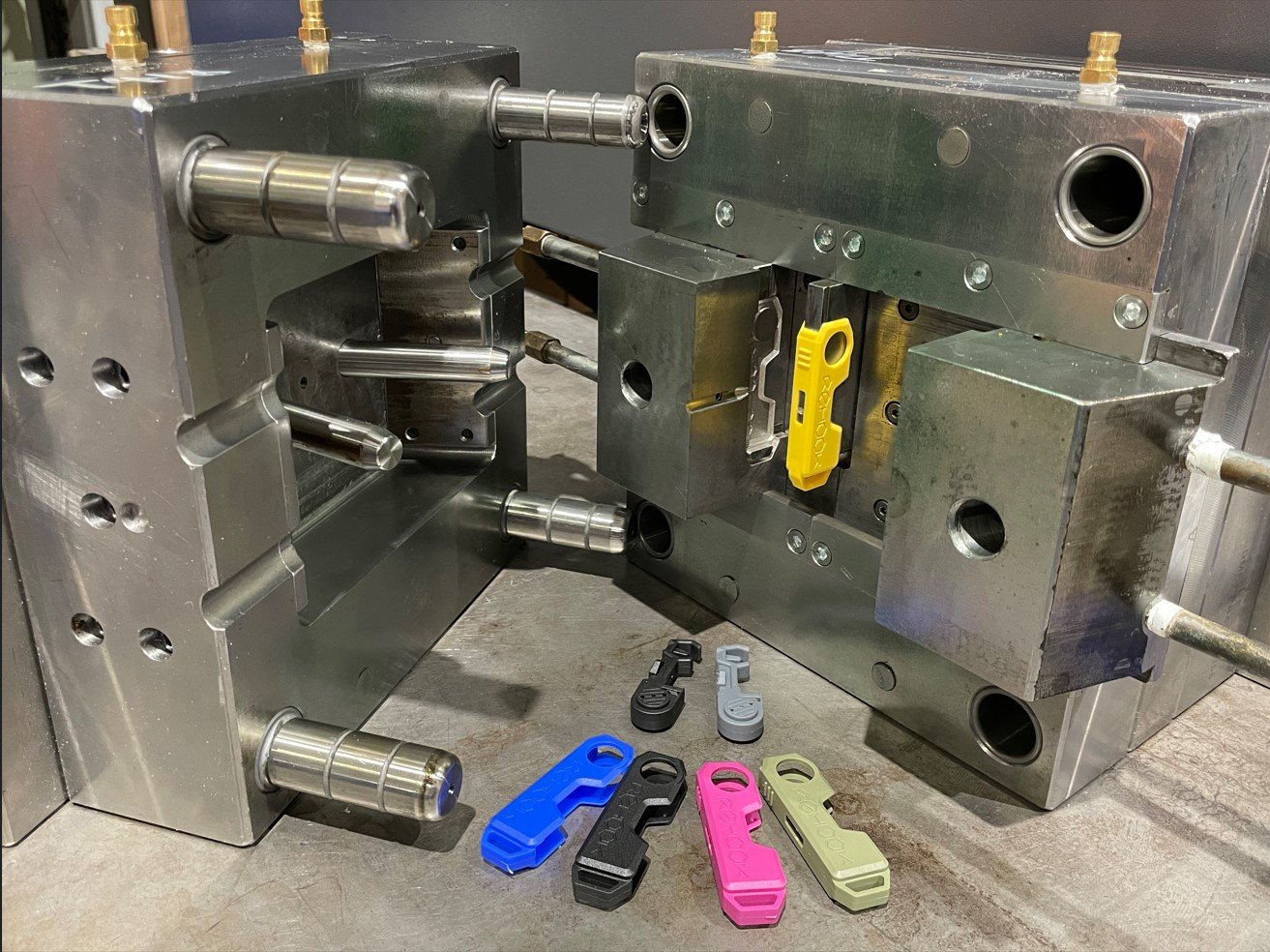
Rather than building a separate single-cavity tool for each different part a product needs, a family mold combines several different part cavities, a housing, a cover, a small bracket, into one tool, so a single molding cycle produces one of each part simultaneously rather than running multiple separate tools.
Weighing the Cost Savings Against Single-Tool Builds
A family mold’s combined tooling cost is often lower than the sum of several separate single-cavity tools, since it shares a base, a clamping setup, and machine time across all the parts it produces, making it attractive for a product with several distinct but related components.
| Family Mold Factor | What It Means for Multi-Part Products |
|---|
| Family mold concept | Combines several different part cavities into one tool and cycle |
| Cost savings | Often lower combined cost than building several separate single-cavity tools |
| Process matching | Works best when included parts have similar wall thickness and cooling needs |
| Quantity matching | Best suited when a product needs equal quantities of each included part |
Have a product with several different plastic components?
Share your parts list and we’ll help determine if a family mold makes sense.
Matching Parts With Similar Process Requirements
A family mold works best when its different cavities have reasonably similar wall thickness, cooling time, and injection pressure needs, since the whole tool runs on one shared cycle and process setting, which means a mismatched part, one needing a much longer cooling time than its neighbors, can hold up the entire cycle.
Confirming Matched Quantity Needs
A family mold makes the most sense when a product genuinely needs one of each included part per unit, since the tool produces a fixed set together every cycle, which means it’s a poor fit if one component’s demand significantly outpaces another’s.
Need help matching part process requirements for a family mold?
We’ll review wall thickness and cycle time compatibility across your components.
Common Mistakes
A common mistake is combining parts with very different cooling or wall thickness needs into one family mold, creating process compromises for every cavity. Another is choosing a family mold for parts needed in significantly different quantities, wasting capacity on the lower-demand component. A third is underestimating the design complexity of balancing fill across genuinely different cavity geometries.
How This Connects to Other Molding Topics
Choosing a Molding Partner for Family Mold Programs
Conclusion
Family molds can meaningfully lower tooling cost for products needing several different matched components, provided those components share reasonably similar process requirements and are needed in matched quantities. Evaluating both factors upfront is what determines whether this approach actually pays off.
Frequently Asked Questions (FAQs)
What is a family mold?
A tool combining several different part cavities, so one molding cycle produces one of each part simultaneously.
Does a family mold always save money?
Often, compared to building separate single-cavity tools for each part, but it depends on how compatible the parts are.
What makes parts good candidates for a family mold?
Similar wall thickness, cooling time, and injection pressure needs across all the included cavities.
Can a family mold cause process compromises?
Yes, if one included part has significantly different process needs than its neighbors, since the whole tool shares one cycle.
When is a family mold not a good fit?
When the different parts are needed in significantly different quantities, or their process requirements don’t match well.



 20+ Years Experience