In the construction sector, parts and components must meet demanding criteria: durability, weather resistance, precision, and cost-effectiveness. As materials evolve, more companies are turning to plastic injection molding construction parts to replace or augment traditional materials like metal, wood, or concrete elements.
If you’re in construction (or supply to it) and thinking: can we get structural parts, connectors, fittings, housings, or trim via injection molding?, the answer is yes — and with the right partner, you can unlock major advantages in cost, speed, and performance.
At LXG Mold Tooling, we specialize in construction industry injection molding service. We build molds, run production, and deliver injection molded construction parts that satisfy structural, regulatory, and aesthetic demands. Let me walk you through the landscape, the benefits, challenges, and how you can use this to your advantage.
Why Injection Molded Construction Parts Are Gaining Traction
Before diving into capabilities, let’s see why so many construction product manufacturers are embracing plastic injection molding:
1. Lightweight & Lower Handling Costs
Plastic parts weigh significantly less than metals or concrete components. When you scale up — thousands of parts or long pipelines — reduction in weight leads to lower transport, lifting, and labor costs. (As one construction-focused review noted, plastic parts in large-scale projects can dramatically cut budget for shipping and handling.)
2. Corrosion Resistance & Longevity
Unlike metals, properly selected engineering plastics resist corrosion, moisture, and chemical attack. For outdoor or underground uses (e.g. pipe fittings, window frames, cladding), plastic parts often outlast metal alternatives in harsh environments. Hansen Plastics describes how plastics in construction resist weathering and rot, giving longevity advantages.
3. Design Freedom & Complexity
Injection molding lets you produce complex shapes, integrated features, internal channels, snap-fits, hollow geometries, ribs, and fine details — things that are difficult (or very expensive) with machining or casting. That flexibility is a big win in construction parts that must integrate with other systems (wiring, plumbing, anchoring).
4. Repeatability & Volume Efficiency
Once you invest in a high-quality mold (the upfront cost), the cost per part becomes low, especially in large runs. Plastic injection molding is ideal when you need many identical parts with consistent quality — which is often the case for prefabricated modular structures, connectors, tiles, and façade elements.
5. Sustainability & Recycling Options
Many plastic types used in injection molding can be recycled or reused. Some manufacturers also mix in recycled plastic content while maintaining performance. For green building initiatives, this is an appealing benefit.
Injection Molded Construction Parts — Key Applications
When people talk about injection molded construction parts, they often refer to:
Window & door hardware: frames, hinges, latches, handles, seals.
Pipe fittings & plumbing components: elbows, joints, connectors, caps — plastic injection molding is ideal due to corrosion resistance
Electrical / conduit fittings: junction boxes, connectors, clips, covers.
Cladding / façade trim & decorative elements: moldings, profiles, decorative fascias.
Structural connectors: brackets, fasteners, anchoring frames for modular systems.
Equipment housings & covers on construction machinery, tools, and control boxes.
Insulation components / panels for thermal or acoustic insulation.
Drainage & roof parts: gutters, downspouts, scuppers, vents.
A company like Rodon Group highlights how plastics are used in window & door systems and plumbing / electrical parts in construction.
In short: if your construction product includes any component that’s not structural steel or large reinforced concrete, there’s a chance injection molded plastic can play a role.
How LXG Mold Tooling Approaches Construction Injection Molding
As a manufacturer focusing on construction industry injection molding service, here’s how LXG Mold Tooling positions ourselves to deliver real value:
A. Strong Design & Engineering Foundation
We begin with Design for Manufacturability (DFM) reviews: wall thickness, draft, gate placement, ribs, stress zones, shrinkage — especially important in structural or load-bearing construction parts.
Material selection is critical. We guide you to engineering plastics (ABS, PC, reinforced Nylon, PBT, PP, PVC blends) that meet UV, fire, load, impact, and environmental demands.
We run simulation tools (moldflow, finite element) to predict shrinkage, warpage, cooling, and fill behaviors early, reducing costly revisions.
B. Rapid Tooling & Prototype Stage
For construction clients, quick validation is often needed — pilot jobs, field tests, compliance checks. That’s where rapid injection mold tooling and rapid tooling for injection molding come in.
We can produce soft-aluminum or hybrid molds for prototype runs (hundreds or low thousands) to test in real conditions. This gives you confidence before committing to full production molds.
C. High-Quality Production Tooling
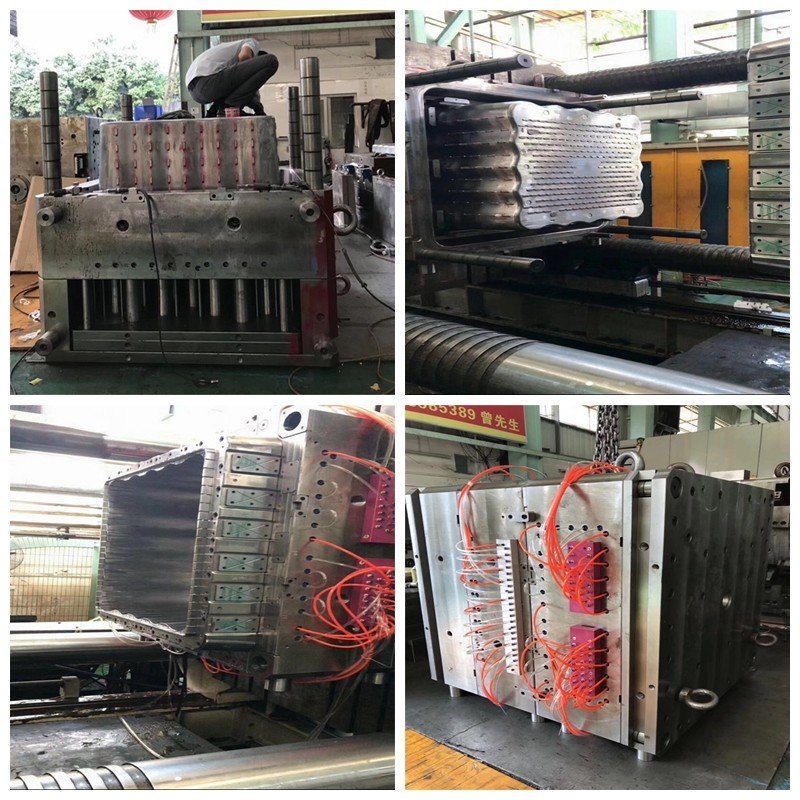
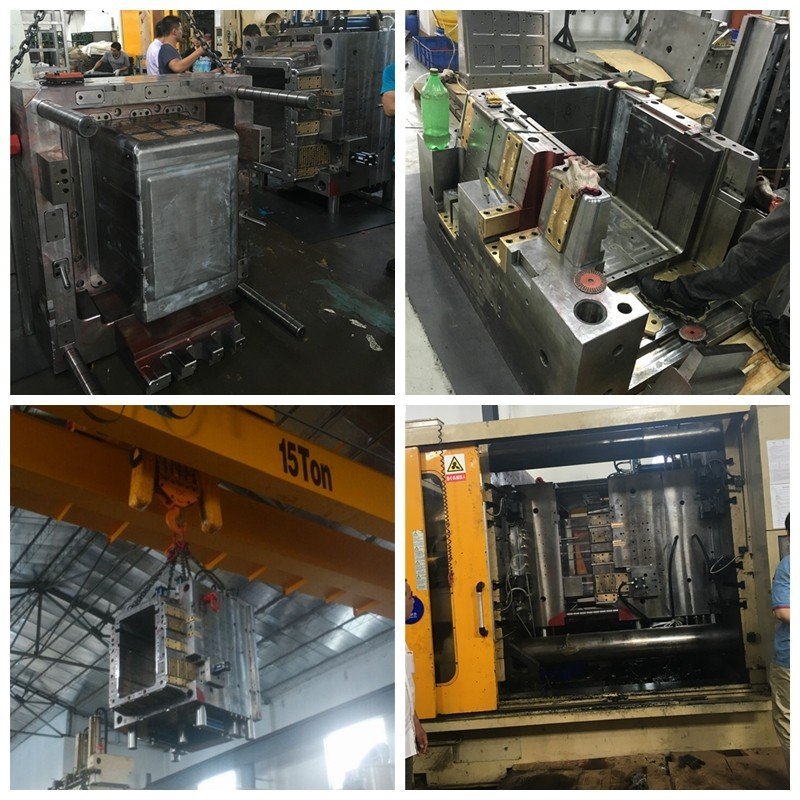
Once the prototype is validated, we manufacture hardened steel injection molding tools capable of high cycles while maintaining precision. We focus on robust mold design — cooling systems, venting, ejection, tool durability — to support your long-term production.
D. Precision Molding & Process Control
In production, we adhere to strict control: temperature control, consistent injection parameters, process validation, in-line inspection, SPC, and part sampling. This guarantees your constructed parts arrive within tolerance, without surprises.
E. Post-Processing & Secondary Processes
Many construction parts undergo finishing: surface textures, coatings, insert molding (e.g. embedding metal threads or fittings), assembly, and packaging. LXG handles these so you get finished parts, ready for installation.
F. Logistics & Support
We manage shipping, customs, and part delivery so your components reach construction sites on schedule. For global clients, we support local stocking, drop shipping, and just-in-time deliveries.
Common Challenges & How to Overcome Them
No manufacturing path is free of challenges. But in the realm of construction injection molding, knowing these up front helps:
1. High Upfront Tooling Cost
Steel molds are expensive. But we mitigate this through staged tooling: prototype molds, then incremental investments to full production molds as demand scales.
2. Material & Regulatory Requirements
Construction parts often must meet fire ratings, UV exposure, load ratings, building codes, certifications. We guide you to plastics and additives (fire retardants, UV stabilizers, fiber reinforcements) that comply.
3. Large Part Size / Warpage
Some construction parts are large (e.g. trim lengths, panels) and subject to warpage or sink. We employ mold design features (cooling, uniform wall thickness, ribs) to control this, along with simulation.
4. Surface Finish & Aesthetics
Because many parts are visible (trim, façade), surface finish, texture, color consistency, and appearance are critical. Our tooling and finishing capabilities ensure premium looks.
5. Consistency Over Large Volume
When your part is needed in the thousands or millions, maintaining consistent quality is vital. Our SPC, CMM, process validation, and maintenance practices guard against drift.
Step-by-Step Process for Injection Molding Construction Parts
Here’s how we move a construction component from concept to delivered plastic part:
Discovery & Quotation
You share your drawings, specs, load/strength needs, estimated volumes.
We review, suggest materials, run preliminary feasibility, and deliver a quote.
DFM Review & Optimization
Our engineers optimize your design for molding (thickness, draft, ribs).
We run simulations and propose adjustments to reduce risk.
Prototype Tooling / Rapid Tooling
Build a prototype mold (soft aluminum, hybrid) for test runs.
Produce sample parts (50–500) to validate function, fit, performance in real site conditions.
Testing & Iteration
Test samples under load, UV, weather, installation conditions.
If needed, refine mold/tool or plastic selection accordingly.
Production Tooling Build
Once the prototype succeeds, we build full production-grade molds (steel).
Tools go through validation, polish, trials.
Trial Runs & Validation
Run pilot production (few hundred to few thousand) to gauge consistency, cycle times, yields.
Measure, perform FAI, SPC sampling, and fine-tune the process.
Full-Scale Production
Begin high-volume runs.
Monitor cycle stability, maintain tooling, manage rejects.
Post-Processing & Assembly
Finish parts, add inserts or sub-assemblies, packaging, QA checks.
Delivery & Logistics
Manage shipping to construction sites, inventory management, drop shipping.
Why LXG Mold Tooling Has the Edge
To outperform competitors (like large U.S. molders, specialized plastic companies in construction), LXG Mold Tooling offers:
Deep expertise in both tooling and molding — not just injection molding, but mold design & manufacturing.
Global scale & competitive cost base — able to offer high quality at favorable margins.
Speed & flexibility — support for rapid tooling for injection molding means prototypes delivered quickly.
Robust quality systems — we use SPC, CMM, FAI, process validation.
Material variety — from standard resins to reinforced and fire-retardant formulations.
Turnkey service — design, mold, produce, finish, and deliver.
We benchmark ourselves not just against local firms, but against top competitors globally who serve construction/machinery sectors. Many simply don’t combine mold-building + construction-focused plastics experience.
How You (the Buyer) Should Prepare
If you’re shopping for a construction industry injection molding service, here’s what helps:
Provide CAD files, drawings, and target material specs.
Clarify performance requirements: loads, environmental exposure, weather, UV, fire class.
Share expected volumes (initial and long-term).
Ask for material certifications and test reports (flammability, UV, tensile).
Request sample parts and expect iterations.
Ask about mold ownership, maintenance, expected tool life.
Discuss logistics early — site delivery, packaging, customs if international.
Sample Use Cases & Success Scenarios
Case A: Plug & Connector for Wall Panel System
A manufacturer doing prefabricated wall systems needed plastic connectors to lock panels together. They required strength, weather sealing, ease of installation, and precise tolerances. We prototyped, tested, and delivered injection molded construction parts in fiber-filled nylon. The lightweight connectors replaced a heavier metal bracket and sped up on-site assembly.
Case B: Electrical Junction Box for Modular Building
An OEM building modular building pods required weather-resistant junction boxes with integrated wiring channels. We designed injection molded construction parts with UV-stabilized PC/ABS, including overmolding for seals and snap-lid functionality. Tooling and parts delivered met electrical code certifications.
Case C: Decorative Trim and Fascia
A construction finish supplier needed aesthetic trim for façades in custom profiles. Using injection molding and overmolding, we created trim parts with textured finishes that mate smoothly with exterior cladding, while reducing installation labor.
These are the kinds of projects where construction companies, building product firms, and façade manufacturers benefit from a serious injection molding partner like LXG Mold Tooling.
Steps to Get Started With LXG Mold Tooling
Reach out — send your drawings, specs, and volume estimates.
We’ll respond with feasibility, suggestions, and quote.
If it’s viable, we start a DFM dialogue and schedule prototype tooling.
You test, iterate, approve.
We build production tooling, run parts, and deliver.
We’ll be your guide through each step — from concept to installed plastic component on your construction site.
Final Thoughts
If you are in construction, building systems, façade work, modular housing, or building product manufacturing, the shift toward injection molded construction parts is real and accelerating. The advantages — lighter weight, precision, repeatability, corrosion resistance, and design flexibility — are too compelling to ignore.
But success depends heavily on choosing the right construction industry injection molding service. At LXG Mold Tooling, we combine mold-making mastery, molding process control, and construction-grade material knowledge in one integrated offer.
Let’s partner to turn your construction part ideas into real, tested, high-performance plastic components that stand up to the elements and deliver value on your bottom line.
👉 Get in touch with LXG Mold Tooling today and let’s build the future — part by part.
3 Steps For Precision Manufacturing
Share Your Files
We’ll sign an MNDA and assess manufacturability for free.
Recieve A Quote
Clear pricing and lead times, no
surprises.
Place Your Order
Lock in production and move forward with confidence.
Get A Quote Now and let’s build smarter, faster, and stronger — together.
Our Testimonials
our client say's
At LXG Mold Tooling, we believe great products start with great tools. As a global leader in injection mold tooling and high-precision plastic manufacturing, we’ve built our reputation on quality, speed, and trust.
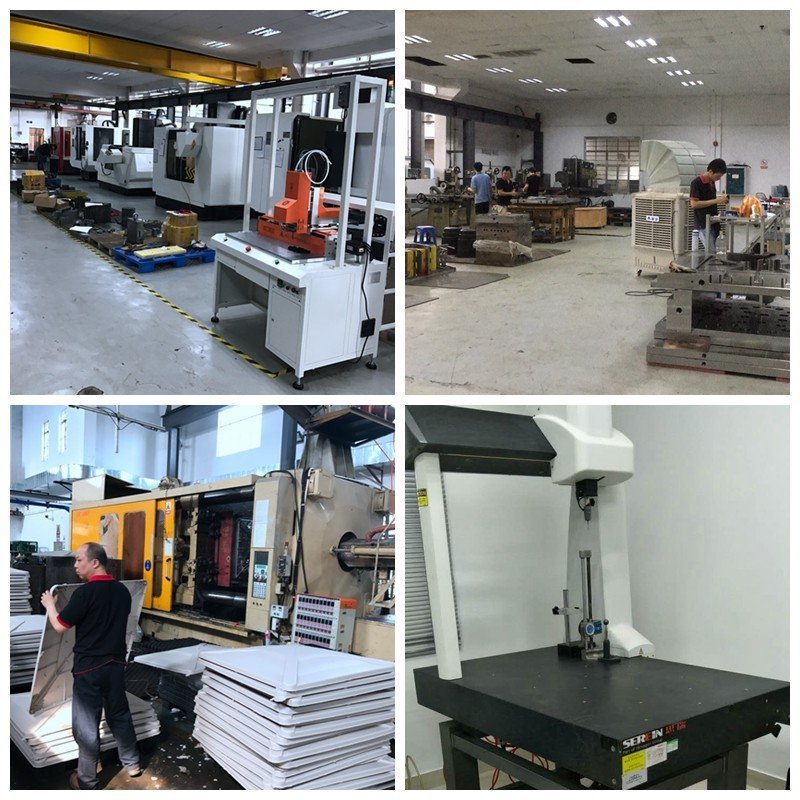
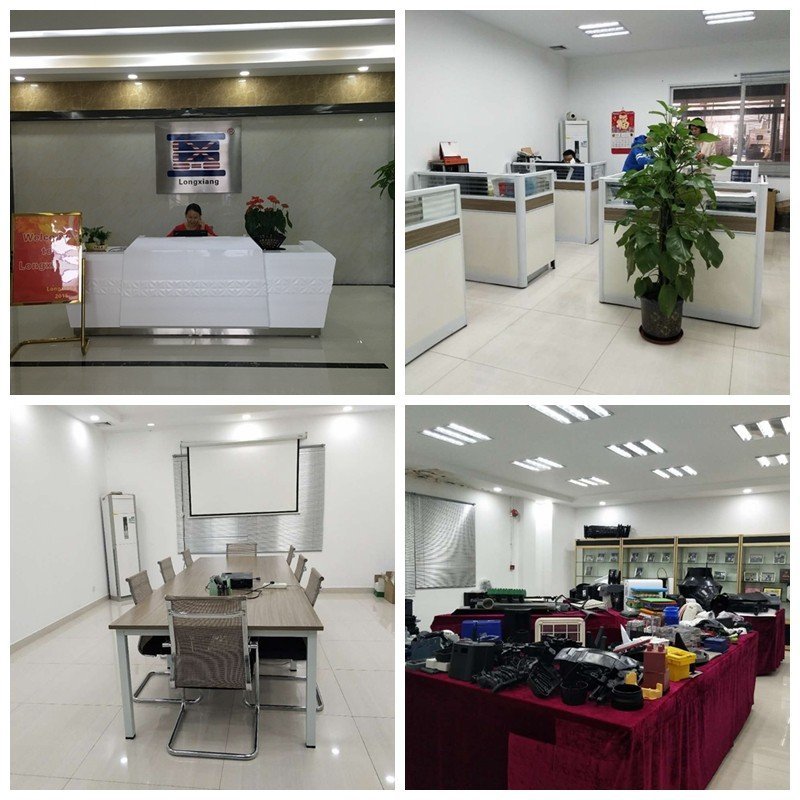
Founded in 2000 as part of LongXiang-Ltd, our company has grown into one of China’s most reputable mold-making and injection molding partners. With a 5,000 sq. meter facility, 120+ skilled professionals, and state-of-the-art equipment, we provide end-to-end solutions — from concept validation and rapid tooling injection molding prototypes to mass production with durable injection molding tools.