When most people talk about injection molding, they envision small to medium plastic components — things like enclosures, gears, caps, handles, and so on. But what happens when your design is huge — a large flat panel, a full-body shell, a structural plastic frame? That’s where large part injection molding comes in — and it brings its own engineering challenges, tooling demands, and manufacturing risks.
Clients looking for a plastic injection molding large part solution often struggle to find partners who truly understand how to mold big. Many smaller molders don’t have the presses, the design expertise, or the process controls for large molds. Others can do it but at a sky-high cost or with compromised quality.
What “Large Part” Really Means in Injection Molding
What qualifies as a “large part”? There’s no universal cutoff, but some typical markers:
Size / footprint: Panels, frames, covers, doors, housings that span several feet (e.g. >500 mm in one or more dimensions).
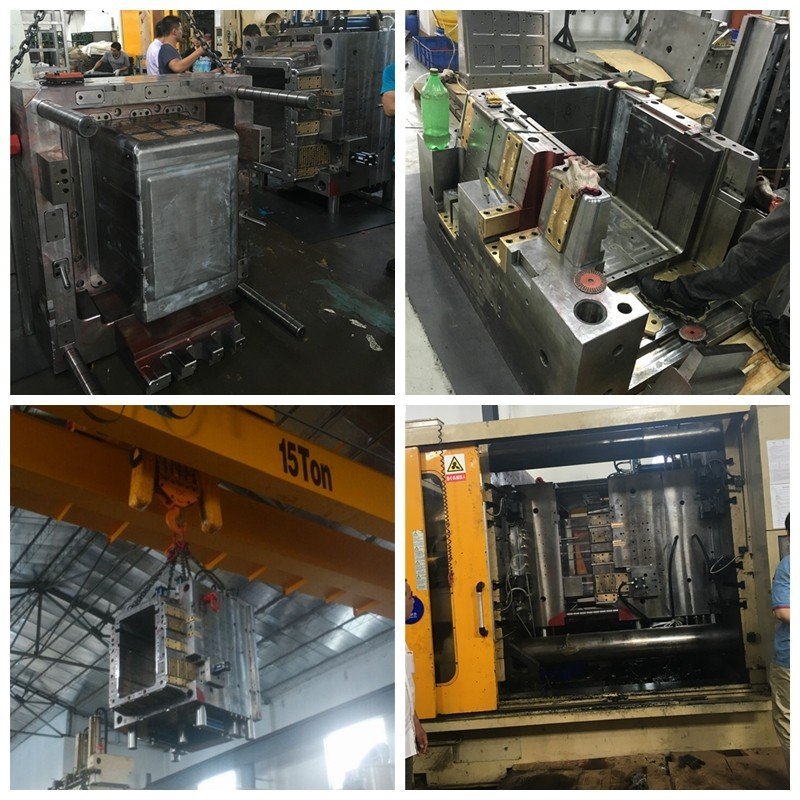
Tonnage / clamping force: Large molds require very high-tonnage presses (e.g. 1,000 to 4,400+ tons) to inject and hold large volumes of molten plastic. EVC Plastics, for example, operates presses from 1,000 to 4,400 tons for large parts.
Shot size / volume: The volume of molten plastic per cycle is large (many hundreds of cubic centimeters or more).
Flatness / warpage sensitivity: Large flat parts (such as panels) are prone to warpage, sink, residual stresses, and differential cooling issues.
Tooling scale: Large multi-cavity, split-mold, or multi-segment tooling with complex cooling, sliding cores, lifters, etc.
Support structure: For large molds, the mold base, platens, support structure, guide pillars, and strength must be robust.
Because of these factors, large part injection molding is inherently more complex than small part molding. Mistakes in design, tooling, or process can lead to warpage, sink, tool failure, or scrap.
Key Challenges of Injection Molding Large Parts
To persuade potential clients that LXG understands these, here are the major challenges:
Warping & dimensional stability
Large flat parts cool unevenly. The difference in cooling rates between the core side and cavity side can bend or warp the part. Even slight thermal gradients matter over large areas.Tool structural rigidity
The mold must be extremely stiff — guide ways, plates, frames must resist deformation under clamping pressure. If the tool flexes, the part dimensions become unstable.Uniform pressure / fill balancing
Ensuring that molten plastic flows and fills all zones uniformly is harder in large molds. If one side fills early and solidifies, the other side may short-fill or show knit lines. You need optimized runner systems or possibly sequential valve gates to control fill.Cooling system design
Efficient cooling channels, uniform cooling, and controlling temperature gradients are critical. Poor cooling leads to shrinkage, warpage, sink marks, and internal stresses.Ejection across large surfaces
Ejecting a large flat plate can be tricky — you need uniform ejection, ejector pins or blades, sometimes segmented eject, or stripper plates. If one zone ejects before the rest, it can distort or bend.Cycle times and thermal mass
Larger parts have more mass, so cooling times are longer. Slow cycles reduce throughput. You need designs that balance part thickness, gating, and cooling to optimize cycle time.Material selection & resin behavior
For large parts, resin flow, viscosity, melt temperature, and shrinkage behavior become more critical. Long flow lengths need lower viscosity, sometimes additives like flow promoters or fillers.Tool manufacturing and cost
Building a large mold is expensive: machining, polishing, alignment, cooling, and mold assembly all scale with size. Tool cost can be five to ten times more than small molds.Quality control and warpage compensation
You often need CMM inspection, warpage compensation strategies, and possibly adaptive compensation in mold machining.
Why Many Large Part Injection Molding Companies Struggle — and How LXG Solves It
From the competitive examples:
PSI Molded Plastics supports large part molding with presses from 450 to 2,100 tons and also uses structural foam / gas assist to mitigate wall thickness warpage. psimp.com
Bemis Contract Group emphasizes their large part molding capability, combining precision and aesthetics in big part
Universal Plastic Mold is a high-tonnage custom and large part injection molder with one-stop facility.
Xometry markets large part injection molding service, promising engineered reviews and fast lead .
To outperform them in content, we need to clearly articulate your unique technical advantages, trustworthiness, global reach, and client focus.
Here’s how LXG Mold Tooling addresses those pain points:
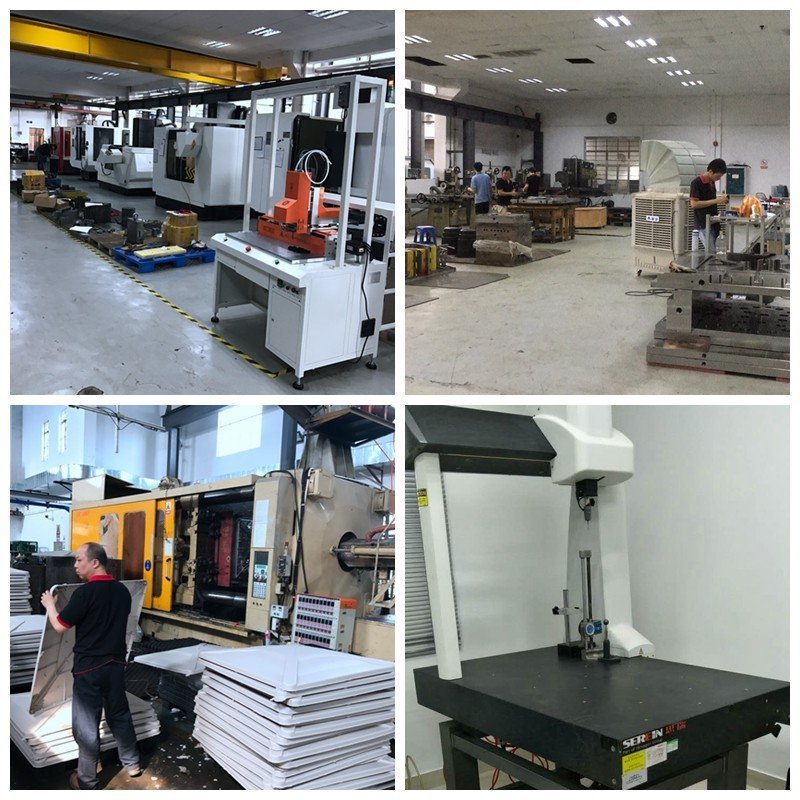
We maintain a fleet of large-clamp presses capable of handling extensive molds and high shot volumes.
Our tooling engineers are experts at large mold structural design, using FEA (finite element analysis) to predict flex, stress, and temperature distribution.
We offer advanced gating strategies including valve gates, sequential gating, and variable thickness flows tailored to large molds.
Our cooling circuit designs use conformal cooling, high-performance inserts, and modular channeling to minimize thermal gradients.
For ejection on large flat parts, we use strategies such as stripper plates, segmented ejector systems, and synchronized ejection to preserve part geometry.
We support warpage compensation, allowing your first mold designs to adjust geometry proactively to account for shrink / warpage.
All molds and parts undergo rigorous CMM inspection, warpage mapping, and SPC monitoring to ensure consistency across large parts.
We supply both prototype large part injection molding (i.e. soft tooling or bridge molds) and full production large part injection molding under the same roof — reducing hand-offs and alignment errors.
Because we have strong capabilities in both toolmaking and molding, we provide a single-source solution — you don’t have to juggle between mold suppliers and molders across borders.
These capabilities place LXG Mold Tooling above competitors who might only offer molding or only small mold specialization.
Applications & Use Cases: Types of Large Parts You Can Mold with LXG
Clients often want examples to visualize. Here are typical applications:
Large flat panels / covers for appliances, enclosures, or machinery
Structural frames / chassis in automotive, EV battery trays, or robotic frames
Hood or door shells for vehicles or large equipment
Large housings / body shells in outdoor equipment, medical imaging systems, or kiosks
Furniture components like large chair backs, armrests, modular partitions
Industrial guards or safety shields
Panels for energy / solar systems
Truck cab inner trim / dashboards for large vehicles
Because these parts often must meet aesthetic, structural, and dimensional tolerances, large part injection molding demands both engineering and manufacturing excellence — which LXG delivers.
How LXG’s Process Works for Large Part Injection Molding
Let’s walk through how we handle a large part project step by step (conversational yet detailed):
Initial Consultation & Feasibility Review
You send us your 3D CAD or drawings. Our engineers run a feasibility review: wall thickness uniformity, draft, flow length assumptions, potential line-of-sight issues. We’ll flag critical risk areas and propose mitigation strategies.Design for Manufacturability (DFM) & Flow Simulation
We put the design through moldflow simulation and FEA to predict flow, cooling, warpage, and stress. Our team suggests gating changes, rib adjustments, thickness transitions, or injection point optimization specifically for large parts.Prototype / Bridge Mold (Rapid Tooling for Large Parts)
If volume is low or you want first samples, we can build a prototype large mold (soft aluminum or hybrid steel) to validate form, function, and identify warpage trends. This is your opportunity to optimize layout and confirm part behavior before committing to production tooling.Production Tool Design & Manufacturing
Once design is locked, we manufacture the final large part injection molding tool (hardened steel). This is where structural integrity, cooling, gating, mold plates, and ejector systems are precision engineered. We use precision machining, EDM, HSC, and polishing tailored for large mold surfaces.Trial Runs & Validation
We run initial sampling with multiple cycles, measure warpage, dimensional accuracy, part properties. We adjust process parameters, gate timing, and balance. We provide you CMM reports, warpage maps, and compliance data.Full-Scale Production
Once validated, we ramp to full volume. Each shot is monitored, SPC control charts tracked, in-line inspections, and periodic audits. We ensure consistency across long runs.Secondary Operations & Finishing
For large parts, you may need trimming, cosmetic finish, painting, laser marking, assembly, etc. We integrate post-processing and assembly under the same project scope to maintain control.Packaging & Shipping
Large parts often require special jigs, custom packaging, and safe handling. We plan shipping to preserve flatness and avoid shipping stress.
Throughout this process, we keep you in the loop — from weekly updates during tooling to pre-shipment checks. Our goal: deliver your large injection molded parts reliably, on spec, and on time.
Why Choose LXG Mold Tooling as Your Large Part Molder
Here’s what makes LXG the smart choice if you want to order large part plastic injection molding:
One-Stop Solution: Toolmaking + molding + finishing + assembly — all in-house.
Engineering Depth: Our team has specialized experience in large part injection molding, from design to warpage compensation.
Global Reach: We serve clients in 40+ countries, delivering molds and parts with full support worldwide.
Strong Track Record: Over 3,000 molds delivered globally.
Scalable Capacities: From single prototypes to large-scale production runs.
Quality Assurance: Rigorous inspection (CMM, warpage mapping), SPC, process controls.
Cost Efficiency: Optimized cooling, gating, and thermal design help reduce cycle time and material costs.
Communication & Transparency: We provide DFM feedback, regular updates, and clear quoting—no surprises.
Flexibility & Customization: We adapt to your geometry, material, and finish needs.
If your project demands injection molding of large plastic parts, LXG is the partner that understands the risks — and can deliver solutions that mitigate them.
Comparative Edge: What You’ll See vs. Other Large Part Injection Molding Companies
When you compare LXG to competitors like PSI or Bemis or Universal, here’s where we aim to stand out:
| Feature | Many Large-Part Molders | LXG Mold Tooling |
|---|---|---|
| Prototype-level large molding | Often outsourced or limited scale | We do rapid tooling for large parts in-house |
| Engineer involvement early | Sometimes after quoting | We do DFM & warpage simulation from day one |
| Tool structural optimization | Basic | FEA-based design for mold stiffness |
| Cooling innovation | Conventional channels | Conformal / high-efficiency cooling paths |
| Ejection over large area | Basic ejectors | Segmented / synchronized / blade ejector systems |
| Warpage compensation | Reactive fixes | Proactive compensation built into tool |
| Integrated finishing / assembly | Often outsourced | Handled within our project scope |
| Global logistics for large parts | Complex, fragmented | We bundle mold + part transport solutions |
| Transparency | Minimal updates | Weekly tooling updates, detailed sampling reports |
By focusing on these differentiators, your content positions LXG above many standard large-part molders.
Best Practices & Tips for Customers Ordering Large Part Injection Molding
If a prospective client is reading this, you can give them tips that also reinforce your value:
Design with uniform wall thickness — Avoid sudden changes; ramp thickness gradually.
Use ribbing and stiffeners to reduce sag or warpage in flat panels.
Optimize gating location for flow balance — often multi-gate or sequential gating is necessary.
Plan cooling early — long-flow distance requires thoughtful cooling design.
Include draft angles and reliefs on large surfaces to ensure ejection.
Specify allowable warpage tolerance early so expectations are clear.
Ask for warpage mapping or predictive simulation before committing to production mold.
Consider hybrid or bridge molds for validation before full hardened tool.
Understand the handling logistics — shipping and packaging of large molded parts is non-trivial.
Review tool maintenance and mold life projections — a large mold should be maintainable over tens or hundreds of thousands of cycles.
When clients follow these best practices — and partner with a molder who understands them — the success rate goes way up.
3 Steps For Precision Manufacturing
Share Your Files
We’ll sign an MNDA and assess manufacturability for free.
Recieve A Quote
Clear pricing and lead times, no
surprises.
Place Your Order
Lock in production and move forward with confidence.
Get A Quote Now and let’s build smarter, faster, and stronger — together.
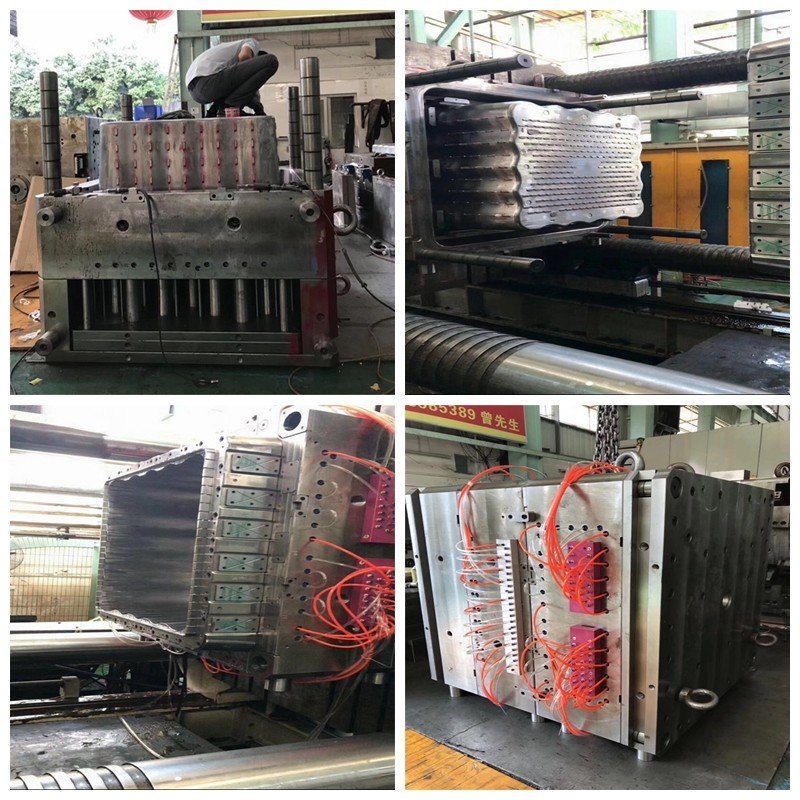
Our Testimonials
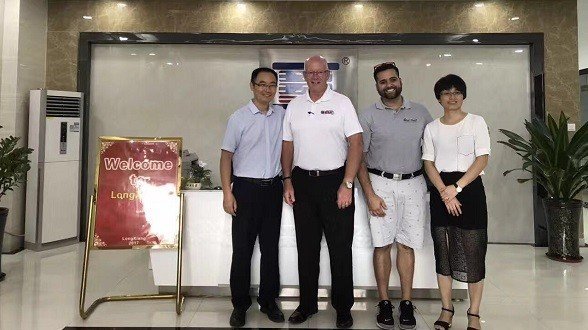
our client say's
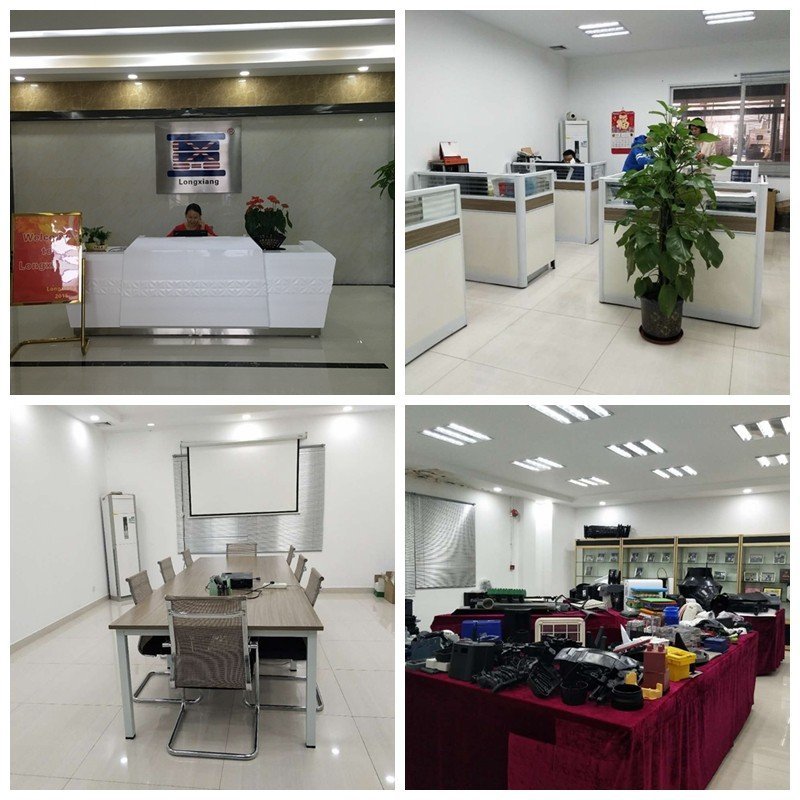
At LXG Mold Tooling, we believe great products start with great tools. As a global leader in injection mold tooling and high-precision plastic manufacturing, we’ve built our reputation on quality, speed, and trust.
Founded in 2000 as part of LongXiang-Ltd, our company has grown into one of China’s most reputable mold-making and injection molding partners. With a 5,000 sq. meter facility, 120+ skilled professionals, and state-of-the-art equipment, we provide end-to-end solutions — from concept validation and rapid tooling injection molding prototypes to mass production with durable injection molding tools.


 20+ Years Experience